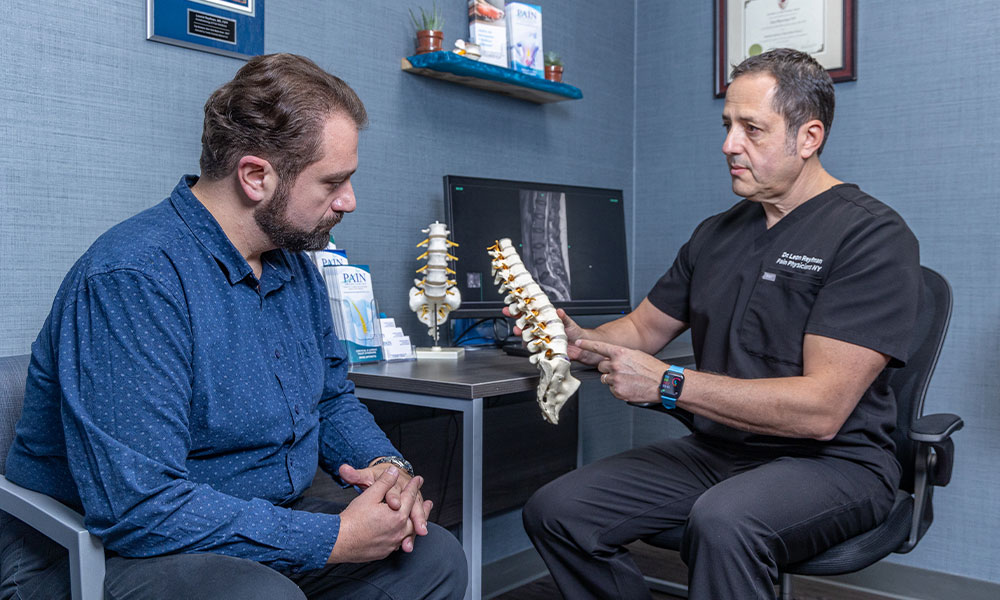

The study of cellular engineering for the purpose of repairing damaged organs and tissues is known as regenerative medicine. Innovative practices in stem cell therapy and platelet-rich plasma (PRP) facilitate new ways for the body to heal itself. The emerging potential of regenerative therapy provides ultra-efficient healing possibilities when it comes to pain management.
Dr. Leon Reyfman at Stem Cell Therapy NYC specializes in non-invasive, regenerative treatments for chronic pain. With years of extensive clinical training, the experienced team of doctors at Stem Cell Therapy NYC guide you on how to best treat your pain with progressive medicine and restorative therapies including:
Regenerative spine treatments. These non-surgical treatments are ideal for things like damaged discs and cartilage caused by injury or disease with stem cell therapy for your spine and intradiscal PRP.
Regenerative joint treatments. Stem cell therapy for joints is commonly prescribed for arthritis and labral tears.
Regenerative nerve treatments. Nerve entrapment release, combined with PRP, has potential to provide long-term relief of pain caused by nerve damage.
From tennis elbow to frozen shoulder, restorative therapy has answers to many musculoskeletal and neuropathic conditions. Injectable therapies like platelet lysate injection, Via Disc and intradiscal ozone navigate tricky areas of the spine without causing additional inflammation. Injuries or illnesses that have the potential to benefit most from regenerative therapy are ones in which conservative therapy has failed, and surgical options are too invasive.
Natural wear and tear that comes with aging inflicts stress on vital joints and muscles, leaving you with pain that physical therapy and pain medications can’t permanently cure. A few conditions most commonly treated with regenerative therapy include:
Stem cell therapy for arthritis has revolutionized joint regeneration possibilities in the shoulder, hip, knee and ankle.
Non-surgical spine treatment for conditions like scoliosis, and spine arthritis are the most efficient in de-escalating inflammation.
Pain from sciatica in the legs or carpal tunnel syndrome in hands and wrist respond well to regenerative nerve treatments.
Meniscus tears, tendonitis, bursitis and other wear-and-tear injuries due to aging or sporting activities benefit significantly from regenerative cell therapy.

PRP and stem cell therapy for joints are types of joint regeneration therapy. These minimally invasive procedures supplement damaged tissue with beneficial growth proteins to recover lost mobility and relieve pain. Two examples of stem cell therapy for joints include:
Bone marrow stem cell injections. Healthy bone marrow is removed from one part of your body and inserted into the damage area to encourage new growth.
Adipose tissue injections.Fatty tissue is transplanted to the problem area, improving joint function by repairing damaged cartilage.
Not all stem cell joint therapy involves transplanted cells. You may have a positive response to a therapy that may be considered unconventional by others. Stem Cell Therapy NYC doctors explore with you alternative forms of joint regeneration therapy, with treatments like:
Shock wave therapy. High energy sound waves are used to stimulate the body’s natural healing process.
Ozone therapy. Ozone gas is injected to help fight disease by improving blood circulation, eliminating bacteria and promoting new growth.
Laser therapy. Light energy is used to stimulate joint tissue and, in some cases, eliminate cancerous and precancerous cells on the skin.
Restorative solutions for healing address the source of pain as opposed to covering up its symptoms. This direct approach provides long-lasting results without lengthy recovery time or risk involved with major surgery. Utilizing the body's own healing processes in conjunction with stem cell procedures and other non-surgical treatments, regenerative cell therapy provides you with optimal, long-lasting pain relief.
Chronic pain significantly degrades quality of life and keeps you from doing the things you love most. Regenerative therapy is the go-to solution for conditions like back, neck and disc injuries, shoulder problems, hip pain and osteoarthritis. Just a few of the benefits you receive from regenerative therapy include:


Non-intrusive procedures involving injections instead of incisions eliminate cost, stress and risk involved with major surgeries.

Regenerative cell therapy relies on natural growth proteins to treat the cause of pain at its source.

Post-op pain medications may be habit-forming and harsh on your body. Daily medication takes a toll on your organs after long-term use.

Certain neck and back injuries require non-surgical treatment to not further inflame herniated discs.
Stem cell therapy or PRP may work for you if you suffer from pain caused by arthritis, spinal injury or other musculoskeletal issues. A few factors to consider when deciding whether or not to go the regenerative route include:
Overall health. Any pre-existing conditions that could inhibit the effectiveness of the procedure should be discussed before treatment.
Pain level. You suffer from chronic pain that impedes mobility and prevents you from enjoying life.
Surgery avoidance. Some pain caused by an illness or injury can’t be cured with major surgery; and you may want to avoid it all together.
While they treat similar ailments, the difference between PRP and stem cells is in their source, what they treat and how they’re administered. It’s usually PRP for moderate injuries, stem cells for more severe conditions.
Complications from surgery often leave you with a nightmare of bigger health problems than the ones you started with, not to mention financial burdens and emotional stress. While chronic pain may have you grasping for answers, ultramodern research in stem cell joint therapy provides you with relief without going under the knife.
Certain health problems don’t have a surgical solution. For example, joint regeneration therapy incorporates exosomes and alpha 2 macroglobulin to treat ligament injuries and degenerative disorders that invasive surgery may only complicate. Other benefits of opting for regenerative therapy over surgery involve:
Lasting results. Regenerative cell therapy prompts the body to adopt transferred nutrients and proteins to heal itself, diminishing pain and preventing it from returning.
Shortened recovery period. Depending on your case and the procedure, injectable stem cell therapy conditions normally require only a few days or weeks of monitored activity after treatment.
Lowered risks. In opting for regenerative therapy, there is a lowered risk of infections, further nerve damage or possible blood clots.
Cost. Regenerative therapies are a good investment as they don’t come with major risks and high cost of surgery.
Recovery from regenerative therapies varies depending on what part of the body was treated and how severe the damage. While procedures themselves last under an hour, recovery time could last from a few days to a few weeks. Factors such as age, overall health and pre-existing conditions play a role in determining what your recovery will be like.
The experts at Stem Cell Therapy NYC provide regenerative therapy services in multiple locations in New York City and answer any questions you have concerning your eligibility for treatment. Contact Stem Cell Therapy NYC to learn what to expect before, during and after treatment and if regenerating therapy can change your life.
Regenerative therapies are treatments that help repair, restore, or replace damaged tissues using the body’s natural healing abilities, often through cells, growth factors, or biologically active materials.
They are commonly used for joint pain, tendon injuries, arthritis, ligament tears, chronic inflammation, and soft-tissue damage.
Yes. Most regenerative therapies use your own cells or biologically compatible materials, which lowers the risk of allergic reactions or complications.
Results vary, but many patients notice improvement within a few weeks as the body begins repairing tissue. Full benefits often appear over several months.
In many cases, they can delay or reduce the need for surgery, especially for early-stage joint issues. However, severe damage may still require surgical intervention.
The information on this website is provided for educational purposes only and is not intended as medical advice. Diagnosis and treatment decisions should always be made in consultation with a qualified healthcare provider following a thorough clinical evaluation. Individual results may vary.
