

How Does PRP for Foot and Ankle Treat Pain?
By using your body’s own blood to repair tendons and regenerate damaged tissue, platelet-rich plasma (PRP) therapy is an effective and progressive treatment for pain in your feet and ankles. The anti-inflammatory nature of PRP for foot and ankle problems regulates blood flow to infected areas, alleviating pressure-causing pain.
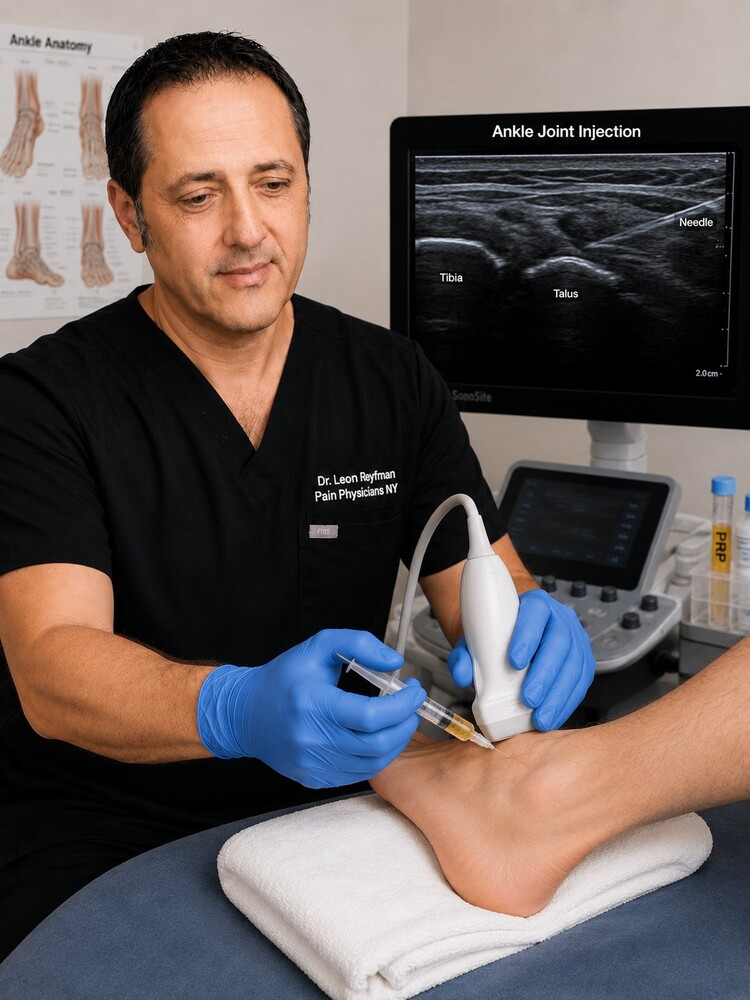
If you’re experiencing pain in your feet and ankles due to injury, arthritis or overuse, Dr. Leon Reyfman and his team of PRP experts at Stem Cell Therapy NYC are experts in non-invasive pain management and provide a broad spectrum of regenerative therapies to have you back on your feet in no time.
What Conditions Does PRP for Foot and Ankle Treat?
Complications with diabetes, gout inflammation and arthritis are conditions that lead to pain in all areas of the feet and ankles. Dull pain in the arch, forefoot or heel may be caused by stretches or tears in tendons and can make daily activities feel impossible.
PRP therapy is intended to treat the intricate systems of nerve and tissue in the foot. By using your body’s natural healing mechanisms, PRP for foot and ankle disorders delivers regenerative cell repair directly to the damaged tissue. This type of therapy provides relief from pain caused by:
- Plantar fasciitis. PRP for plantar fasciitis treats pain caused by damage to the tissue and tendon that connect toe to heel.
- Tendonitis. A torn Achilles tendon may take you out of the game, but not for long with the help of PRP for sports injuries.
- Degenerative joint disease. Issues with stiffness and elevated pain in the feet at the end of the day may be best treated with regenerative joint treatments like PRP.
How Does PRP Treat Nerve Damage in My Feet?
During PRP for foot and ankle pain, platelets packed with growth factors stimulate nerve regeneration and blood circulation. With over 200,000 nerve endings in the human foot, the risk of nerve damage in the feet increases with age.
Neuropathy in the feet and ankles requires the precision of orthobiologic injections to provide pain relief without the invasiveness of surgery. Regenerative nerve treatments, like platelet lysate injections and nerve entrapment release provide temporary scaffolding and a widened space for compressed nerves to properly heal. Consider PRP for foot and ankle if you’re experiencing:
- Numbness and tingling.Sensory changes that feel like pin pricks, sometimes more concentrated in the morning after sleep, or at night after all day on your feet
- Stiffness. Aching or difficulty flexing your ankle or toes may be signs of osteoarthritis.
- Chronic pain. Daily pain that interrupts your life and keeps you from doing the things you love to do
- Swelling. Inflammation around the ankle joint or top of the foot may indicate bursitis or tendonitis.
How Is PRP for Foot and Ankle Administered?
PRP therapy is a non-surgical treatment that’s direct in intention and procedure. An injection is administered directly into the soft tissue of the foot or ankle so that healthy tissue can begin to develop. The steps of PRP for foot and ankle include:
- Blood draw. Your own blood is used in PRP as opposed to surgical removal from bone or donor tissue used in stem cell therapy.
- Concentration of platelets.Growth factors are separated.
- Injection. PRP injections target the source of pain.
- Recovery. Resting after injection is recommended, as you may experience minor side effects like irritation surrounding the injection site.
You may notice a decrease in pain and improvement in function in just a few weeks. This minimally invasive PRP for foot and ankle pain is normally an outpatient procedure, requiring local anesthetic or mild sedation depending on your condition.
What Types of Foot and Ankle Injuries Does PRP Address?
A slip on the ice or an overextension in ballet, many foot and ankle injuries benefit from the anti-inflammatory aspects of PRP therapy. Because regenerative joint treatments like PRP use your own growth proteins, fortified new tissue helps ankle sprains and muscle strains heal faster.
Dr. Reyfman believes that the least invasive treatments are the most beneficial when it comes to pain management. A few foot and ankle injuries that may benefit most from PRP therapy include:
- Ankle sprains. PRP is beneficial for soft tissue damage that often occurs in your feet and ankles, as well as for hand and wrist sprains.
- Ligament tears. Due to repetitive motion or injury, ligament tears in the foot can be painful and immobilizing. PRP therapy works quickly to repair ligament damage.
- Morton’s neuroma. Nerve damage in the ball of the foot known as Morton’s neuroma may be best treated with regenerative therapy like PRP for foot and ankle or peripheral magnetic stimulation.
Who’s a Candidate to Receive PRP for Foot and Ankle?
If you’re struggling with arthritis, tendonitis or plantar fasciitis in your feet and ankles and looking for an alternative to surgery and steroid injections, PRP for foot and ankle may be for you. The revolutionary science in stem cell research has now made it possible to alleviate pain through tissue regrowth, eliminating the need for scalpels and stitches.
Contact Stem Cell Therapy NYC if you’re tired of failed conventional therapy for your foot and ankle pain. With locations in all five boroughs of New York City, they are committed to helping you with foot and ankle pain through today’s most innovative restorative therapies.
Page Updated on Jun 15, 2026 by Stem Cell Therapy