
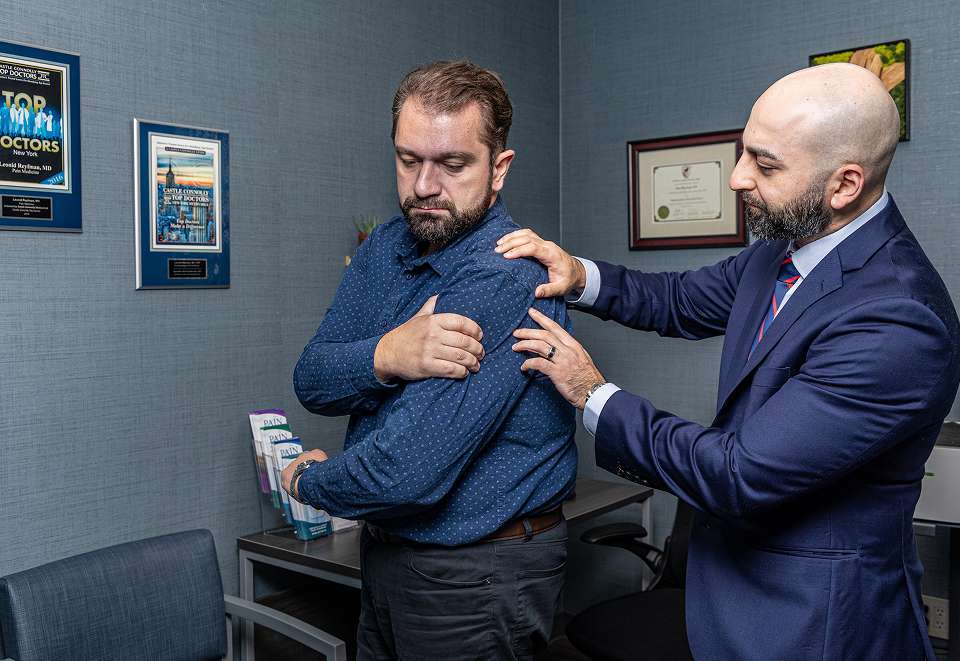
What Is a Rotator Cuff Tear?
A rotator cuff tear occurs when one or more of four muscles and tendons in your upper arm is damaged or pulled from the bone. The rotator cuff tissues keep your humerus firmly in the shoulder socket. The tendons assist in lifting, rotating and stabilizing your arm during motion. Common risk factors include:
- Age. As you get older, your tendons deteriorate naturally, so tears become more prevalent especially after the age of 40.
- Repetitive motion. Depending on your job or sport, repetitive overhead actions such as painting, swimming or tennis continually stress out your tendons.
- Poor posture. Slouching or rounding your shoulders places additional stress on the rotator cuff muscles over time.
- Inadequate conditioning. Weakness of the shoulder and upper back muscles reduces the stability of the joint, making injury more likely.
- Past shoulder injury.If you’ve had previous episodes of shoulder tendonitis or bursitis, your tendons are more likely to rupture again.
At Stem Cell Therapy NYC, experienced regenerative therapy doctors led by Dr. Leon Reyfman, offer non-surgical treatments that include:
- Stem cell therapy and PRP treatments for joints
- Stem cell therapy and PRP for your back
- Stem cell therapy and PRP for nerves in your shoulder
How Do I Know if I Need Non-Surgical Treatment of a Torn Rotator Cuff?
You may not be aware that you have a rotator cuff tear right away, particularly if the tear occurs gradually. Initially, you experience a dull pain deep in your shoulder, which is worse at night. Simple movements like reaching behind your back or lifting your arm become stiff and painful. Other symptoms that may indicate you’ve torn rotator cuff tissue include:
- A dull aching feeling deep inside your shoulder that you may mistake for shoulder arthritis
- Feeling like you’re being stabbed in the shoulder
- Weakness in the affected arm
- Trauma that causes immediate intense pain
Physical therapy is usually the first non-surgical shoulder treatment recommended by most doctors. And while regular exercise strengthens the surrounding muscles, it doesn’t always result in long-term pain relief and in fact, may worsen your shoulder pain. Pain medication can be habit-forming and stopping all activity you enjoy that requires you to move your arm drastically cuts into your quality of life.
What Other Conditions Does Non-Surgical Shoulder Treatment Relieve?
Instead of relying on painkillers or invasive procedures, regenerative therapies, such as platelet-rich plasma (PRP) and stem cell injections, use your body’s own healing power to repair damaged tissues, reduce pain and restore movement. These non-surgical treatments work at the source of your shoulder and rotator cuff injuries and other musculoskeletal issues, such as:
- Rotator cuff tendonitis. Orthobiologics encourage tendon healing, decrease inflammation and restore strength for function.
- Shoulder bursitis. Non-surgical shoulder repair decreases swelling, relieves pressure and enhances comfort when you move.
- Labral tears. Stem cell therapy for labral tears facilitates tissue repair and stabilizes the shoulder joint without surgery.
- Shoulder arthritis. Activate tissue regeneration, reduce stiffness and preserve mobility.
Your doctor may also suggest additional treatments like shock wave therapy, ozone therapy or laser therapy, depending on your injury and recovery goals. These therapies are frequently combined with regenerative injections and physical therapy to help you regain strength, mobility and shoulder function without surgery.
What Are the Benefits of Non-Surgical Treatment for a Torn Rotator Cuff?
The main benefits of rotator cuff non-surgical treatment are that you recover faster and spend less time away from daily activities. Treatments help your shoulder heal while avoiding long hospital stays and extensive downtime associated with surgery. You may continue your normal routine while gradually strengthening your shoulder. Non-surgical approaches avoid the risks associated with surgery, including:
- Anesthesia risks.You don’t require general anesthesia, which means no possibility of complications like rejection, reactions to medication or side effects during recovery.
- Infection risks.You eliminate the risk of infection that may arise after surgical intervention.
- Surgical complications.You escape possible complications like heavy bleeding, nerve injury or extended recovery time that sometimes follows surgery.
You also skip surgical scars and extended hospital stays. Each rotator cuff injury is unique and non-surgical treatment strategies are customized for your condition. Your NYC doctor examines your shoulder, suggests the appropriate therapies and modifies your plan along the way. This tailored approach optimizes your recovery.
How Fast Does Non-Surgical Treatment of a Torn Rotator Cuff Work?
You usually begin to feel relief within a few weeks. Pain and stiffness start to disappear as inflammation decreases, and your shoulder starts working more smoothly. Full recovery often takes around six to 12 weeks, though deeper or long-standing tears may take a bit longer. Factors that influence your recovery include:
- The severity of your tear
- How early you started treatment
- Your commitment to physical therapy
- Your overall health and activity level
During your rotator cuff non-surgical treatment, you may start noticing improvement after only a few sessions. Some cases require a short series of treatments over several weeks to achieve lasting results. Your doctor tailors your non-surgical treatment for a torn rotator cuff according to your healing progress, ensuring consistent and effective recovery.
As your shoulder gets stronger, you return to normal daily activities. You may still feel mild soreness but with steady progress, your shoulder continues to improve. Staying consistent with your therapy and at-home exercises supports full recovery. If you’re ready to restore shoulder strength and move without pain, contact Stem Cell Therapy NYC today.
Page Updated on May 7, 2026 by Stem Cell Therapy