
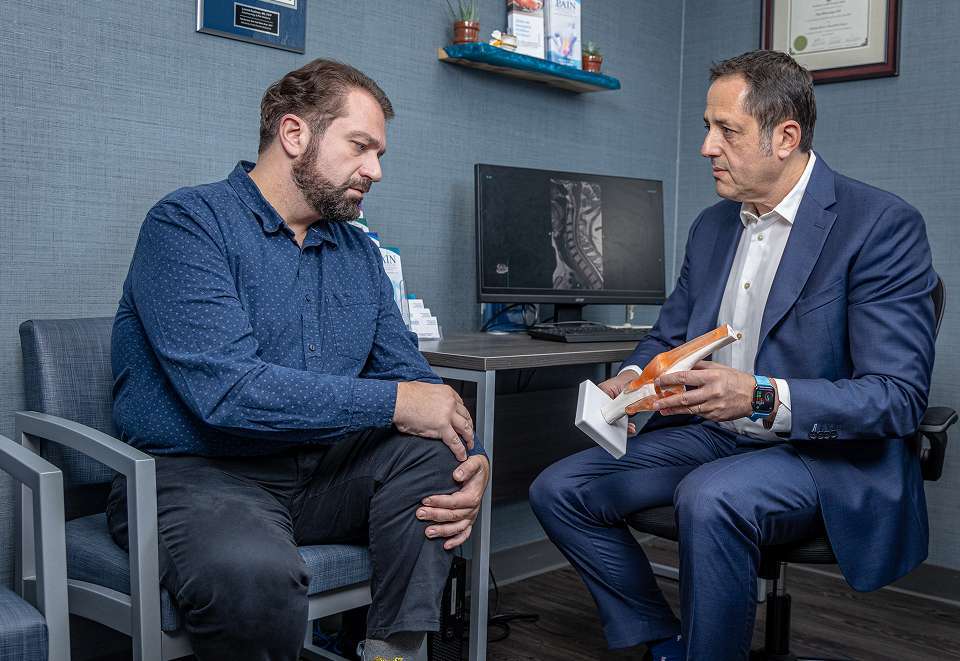
What Is Torn ACL Non-Surgical Treatment?
Innovative methods of regenerative therapy use healing stem cells derived from your own body to manage knee pain from an anterior cruciate ligament (ACL) tear. These cells are even capable of growing into other tissues such as bone, cartilage, muscle and tendons.
At Stem Cell Therapy NYC, a team of pain relief specialists use advanced techniques to promote healing for ACL tears and damaged joints. They focus on your long-term joint health, ensuring each treatment plan supports your recovery and mobility. Combining medical expertise with proven biologic therapies, the medical team relies on ACL non-surgical treatment that may include:
- Stem cell therapy and PRP therapy for nerves when nerves become impinged or trapped in your knee
- Stem cell therapy and PRP treatment for joints to help you regain full knee mobility
- Stem cell therapy and PRP for your back if you also injured your spine
How Do ACL Tears Happen?
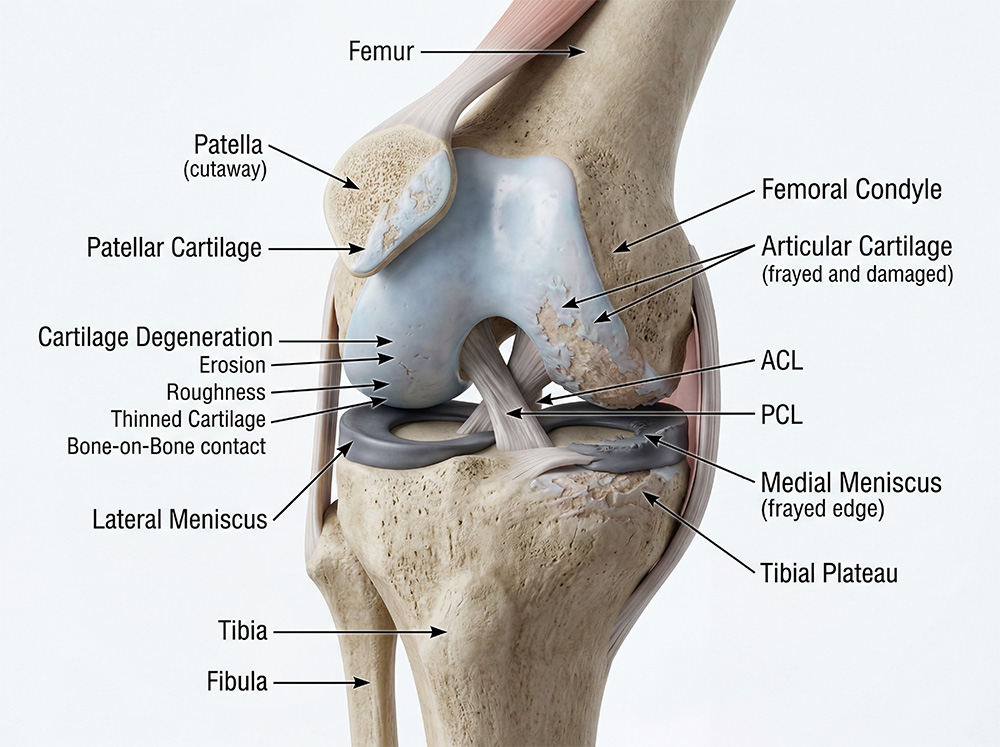
An ACL tear occurs when your knee is forced beyond the range of motion the ligament can safely control. Movements that twist, pivot or hyperextend the joint are what stretch or tear the ligament fibers. ACL tears often result from sudden or forceful actions, such as:
- Stopping abruptly
- Landing unevenly after jumping
- Shifting direction quickly when running
- Rotating the body while the foot remains planted
- Sustaining a strong impact or tackle directly striking the knee
These types of movements cause the ligament to overstretch or rupture, potentially requiring torn ACL non-surgical treatment. An injury can happen during any everyday activity that puts excess pressure on your knee and is common among athletes. Once this takes place, the knee often becomes unstable and unable to maintain normal movement.
Where Does an ACL Tear Hurt and What Are the Symptoms?
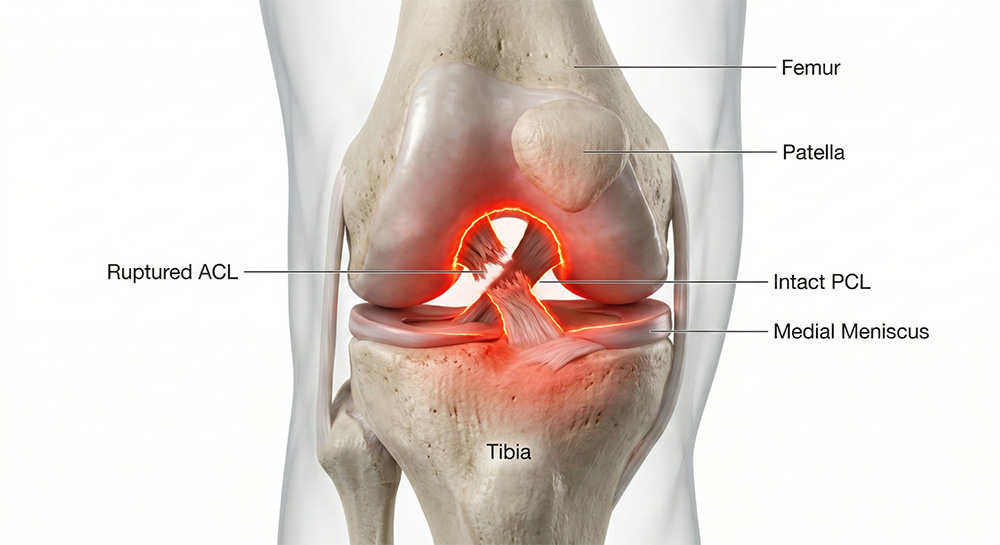
A torn ACL typically causes immediate pain in your knee joint. This pain spreads to several areas depending on the extent of damage and surrounding tissue strain. Discomfort isn’t limited to the ligament itself, since connected structures often become irritated as well. Common areas where ACL pain is felt include:
- Behind the kneecap
- Deep within the joint line
- Along the front, center or outside of the knee
- In nearby leg muscles that compensate for instability
The tear or sprain produces an immediate reaction in the joint as the ligament fibers give way. The sudden pain is often followed by rapid swelling within a few hours. Other symptoms of an ACL tear include:
- Sudden, sharp knee pain at the time of injury
- A popping sound when the ligament tears
- Difficulty standing, walking or bearing weight
- Feeling the knee give out during movement
What ACL Non-Surgical Treatments Are Available for ACL Tears?
Multiple treatments are available to improve stability and function to your knee, from stem cell therapy for knees to regenerative joint treatments like exosomes and laser therapy. Other options available for torn ACL non-surgical treatment include:
- Stem cell therapy that uses specialized stem cells from your body to stimulate regeneration of damaged fibers and surrounding tissues
- Platelet-rich plasma (PRP), which concentrates platelets and growth factors from your blood to accelerate healing and reduce inflammation in the injured area
- Bone marrow stem cell injection (BMAC) that delivers concentrated bone marrow cells directly into the injured joint to promote tissue repair and recovery
Each treatment works differently and your pain management doctor tailors a plan based on the diagnosis and severity of your ACL tear. The goal of these therapies is to restore knee integrity by encouraging the ligament to repair itself rather than replacing it through surgery.
Can a Torn ACL Heal with ACL Non-Surgical Treatment?
While complete ligament restoration isn’t always possible, many people regain stability through targeted regenerative care. Successful recovery after a torn ACL non-surgical treatment depends on multiple factors leading up to treatment, such as:
- The amount of ligament damage, whether partial or complete
- The body’s individual healing capacity or response to therapy
- The strength and alignment of surrounding muscles
- The consistency of rehabilitation after treatment
Healing gradually continues as the cells stimulate repaired tissue that strengthens the treated area. These procedures support your body’s natural repair process while having minimal side effects.
How Long Does Recovery Take with Torn ACL Non-Surgical Treatment?
After receiving torn ACL non-surgical treatment, most people notice reduced pain and better movement within weeks. Depending on the severity of your injury and the type of therapy used, complete recovery takes up to several months. Full recovery takes time as your knee adapts to increased activity. Advanced physical goals and athletic performance require a longer timeline.
By following a structured rehabilitation plan, your knee regains flexibility and strength over time. The recovery process moves through phases that guide healing safely and effectively. Common stages of rehabilitation after treatment include:
- Rest to reduce inflammation and prevent additional strain on the ligament
- Rehabilitationthat restores range of motion and with light strengthening exercises to start
- Rebuilding,which focuses on balance, coordination and controlled movement
- Return to activityand transition from recovery to normal movement and sport-specific training
Who Can Benefit from ACL Non-Surgical Treatment?
People with partial tears, joint instability or lingering pain after a knee injury often respond well to torn ACL non-surgical treatment. These types of injuries usually occur in athletes and active individuals in exercise settings. A prompt evaluation determines the best treatment plan and supports a full recovery that prevents further ligament damage.
With an approach that integrates regenerative therapies with structured rehabilitation, your NYC doctor designs each treatment plan around your specific injury and activity level. Contact Stem Cell Therapy NYC today to schedule a consultation and learn more about restoring your knee stability and gaining lasting comfort.
Page Updated on May 7, 2026 by Stem Cell Therapy