
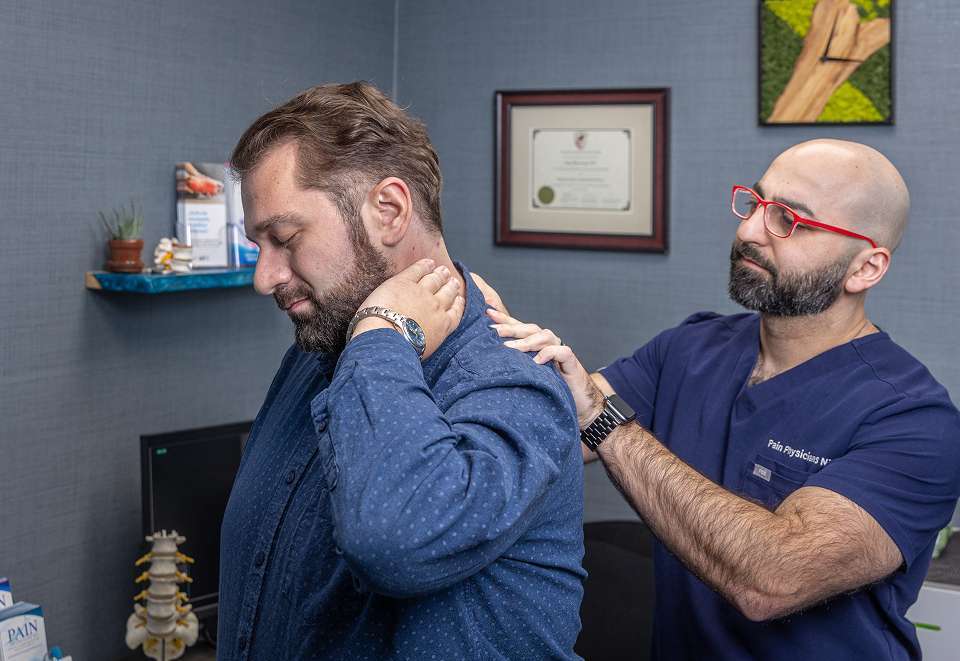
What Is a Pinched Nerve?
A pinched nerve, also referred to as nerve entrapment, occurs when bones, ligaments or muscles put pressure on the peripheral nerves, which are the nerves outside the brain and spinal cord. When a nerve along the spine is pinched, it’s called radiculopathy. Pinched nerves can be a short term or long term problem depending on the location of the trapped nerve.
Pinched nerve treatment requires effective evaluation and a new approach to treatment when pain doesn’t improve from conservative methods. Regenerative nerve treatments provide an innovative method for relieving the pain of entrapped nerves. Dr. Leon Reyfman and his colleagues at Stem Cell Therapy NYC have extensive experience in providing pain relief using non-surgical treatments for many types of nerve, joint and spine pain.
What Are the Symptoms of a Nerve Entrapment?
When a nerve becomes pinched or compressed, you may experience pain ranging from mild to severe. Common symptoms that require trapped nerve therapy include:
- Numbness or loss of sensation
- Burning pain that may radiate outwards
- Tingling, often described as a “pins and needles” sensation
- Muscle weakness
Pinched nerves can happen anywhere in the body. Some of the most common places nerves become entrapped include the neck and lower back. A single nerve may supply sensation to more than one part of your body, so you may have symptoms in more than one area triggered by the same nerve entrapment.
What Causes Pinched Nerves?
Your NYC pain management doctor provides pinched nerve treatment for a wide range of causes because abnormal pressure on a nerve can happen under so many different circumstances. Some of the more common causes of pinched nerves include:
- Osteoarthritis. Over time, wear and tear on your joints causes cartilage to break down. As cartilage breaks down, bones begin to rub on each other causing an overgrowth of bone known as bone spurs. When bone spurs form, they often press on nearby nerves.
- Trauma. Any trauma that causes an injury to joints, muscles or ligaments often leads to swelling or displacement that traps or presses on a nerve. This can be triggered by a car accident, fall or sudden bending or twisting movements that are common in sports injuries.
- Herniated disc. When one of the discs between your vertebrae tears or leaks from wear and tear, it may cause nerve irritation.
- Spinal stenosis. Degenerative spinal changes lead to narrowing of the space in the spinal column surrounding the spinal cord, which may cause nerves to become entrapped or pinched.
If you work in a job that requires repetitive movements, it can lead to nerve entrapment as in the case of carpal tunnel syndrome. Letting back pain go untreated can lead to pinched nerves in your back that lead to sciatica.
What Is Regenerative Pinched Nerve Treatment?
Regenerative medicine aims to stimulate your body’s healing process so that the signals from your nerves to your brain operate properly. Healthy cells from your own body containing growth factors are injected into the area causing pain, relieving that pain, reducing swelling and opening up the nerve canal. Types of regenerative pinched nerve treatment include:
- Stem cell therapy for nerves that uses your own stem cells extracted from fat tissue or bone marrow to promote healing
- Platelet rich plasma (PRP) therapy, which uses platelets concentrated from your blood to help the body heal itself
- Stem cell therapy for the back or PRP for back pain when pinched nerves develop in your spine
- PRP for joints or stem cell therapy for joints if it’s determined that the trapped nerve is in your knee, shoulder or hip
- Prolotherapy that’s done by injecting a dextrose solution or other irritant into the damaged tissue to jumpstart the healing process
Regenerative therapies are being used successfully to repair and restore damaged tissue in many conditions that cause chronic pain such as pinched nerves. These treatments may be a good option for you if other types of trapped nerve therapy such as physical therapy and cortisone shots haven’t been successful in relieving your pain.
What Are the Benefits of Trapped Nerve Therapy Using Regenerative Medicine?
If you’ve been living with pain or other symptoms caused by an entrapped nerve and up to now haven’t experienced effective pain relief, treatment with regenerative therapies such as PRP or stem cells may relieve your pain. Benefits of this treatment method include:
- It’s a minimally invasive alternative to surgery with less risk of side effects and shorter down time.
- Many people experience significant reduction in pain and improved functioning.
- Damaged nerve tissue can be regenerated naturally.
- Risk of becoming dependent on pain medication is eliminated.
- Treatment is done on an outpatient basis, and you go home the same day.
Pinched nerve treatment aims to heal inflamed or injured tissues causing the trapped nerve, rather than just reducing symptoms. Your body’s healing capacity is enhanced using this approach. If you’re seeking relief from chronic nerve pain and are struggling to find a solution, regenerative therapies may be exactly what you’re looking for. Contact Stem Cell Therapy NYC at one of their five convenient locations to find out if you qualify for trapped nerve therapy.
Page Updated on May 7, 2026 by Stem Cell Therapy